Producción Intelectual

Occurrence and characterization of cyst nematode species (Globodera spp.) associated with potato crops in Colombia
2021·
Articulo

Occurrence and characterization of cyst nematode species (Globodera spp.) associated with potato crops in Colombia

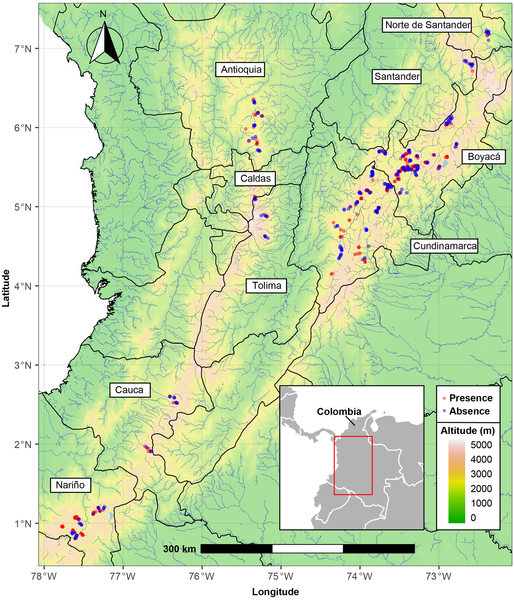
Potato cyst nematodes (PCN) from the genus Globodera spp. cause major losses in potato (Solanum tuberosum) industry worldwide. Despite their importance, at present little is known about the status of this plant pathogen in cultivated potatoes in Colombia. In this study, a total of 589 samples collected from 75 geographic localities from nine potato producing departments of Colombia were assayed for the presence of potato cyst nematodes. Fifty-seven percent of samples tested positive for PCN. All populations but one were identified as Globodera pallida, with conspicuous morphometric variation found among populations. Based on phylogenetic analysis of the internal transcribed spacer region (ITS1-5.8S-ITS2) of the rRNA gene and D2-D3 expansion segments of the 28S rRNA gene, G. pallida from Colombia formed a monophyletic group closely related to Peruvian populations, with the lowest average number of nucleotide substitutions per site (Dxy= 0.002) and net nucleotide substitutions per site (Da= 0.001), when compared to G. pallida populations from South, North America and Europe. A single sample formed a well-supported subclade along with G. rostochiensis and G. tabacum from Japan, USA and Argentina. To our knowledge this is the first comprehensive survey of Globodera populations from Colombia that includes morphological and genetic data. Our findings on species diversity and phylogenetic relationships of Globodera populations from Colombia may help elucidate the status and distribution of Globodera species, and lead to the development of accurate management strategies for the potato cyst nematodes.

Autor(es): Sergio Andres Marchant, Daniela Vallejo, Diego A. Rojas, John A. Martinez, Claudia M. Holguin, Olga Y. Pérez Cardona
CARACTERIZACIÓN GENÉTICA DE REPRODUCTORES DE Prochilodus magdalenae (PISCES: PROCHILODONTIDAE) USADOS EN PROGRAMAS DE REPOBLAMIENTO EN COLOMBIA.
2020·
Articulo

CARACTERIZACIÓN GENÉTICA DE REPRODUCTORES DE Prochilodus magdalenae (PISCES: PROCHILODONTIDAE) USADOS EN PROGRAMAS DE REPOBLAMIENTO EN COLOMBIA.

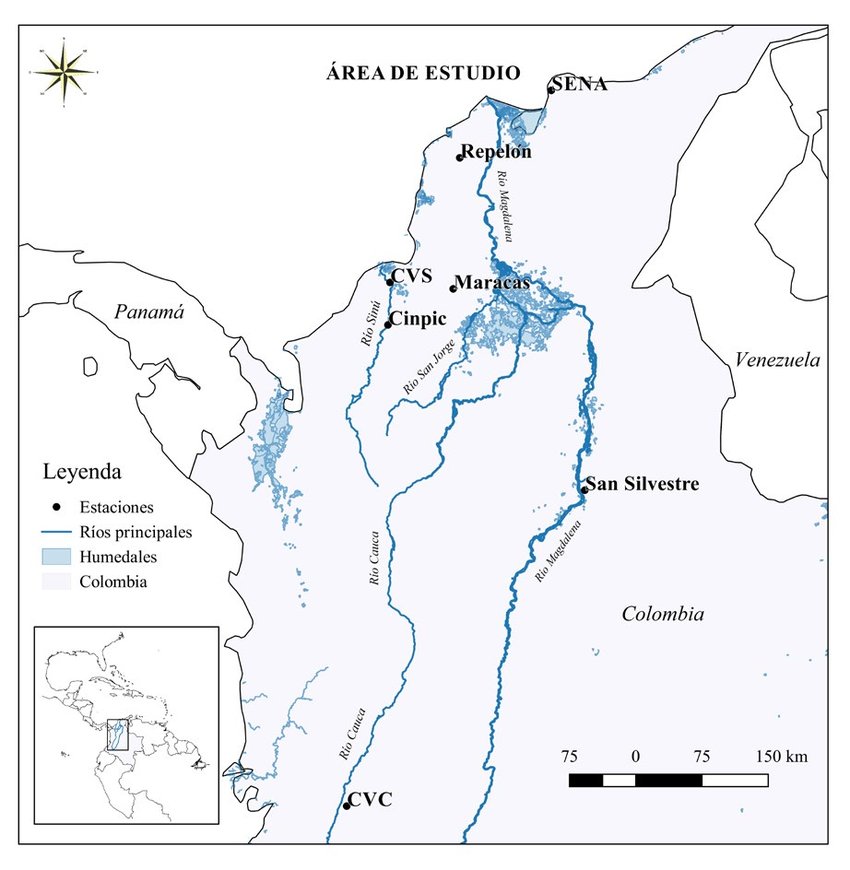
Prochilodus magdalenae es una especie de pez endémico de Colombia conocido por ser un importante recurso de interés comercial y para muchas comunidades relacionadas a las actividades pesqueras como actividad de sustento. No obstante, se ha observado un deterioro poblacional en ambientes naturales debido a factores tales como sobrepesca, fragmentación de ecosistemas, entre otros. Esto hace necesario caracterizar la diversidad genética de P. magdalenae en los sistemas reproductores de algunos centros piscícolas, que son usados para hacer repoblamientos en otras cuencas de Colombia y así proponer criterios técnicos y científicos que permitan el desarrollo de estrategias de manejo para la conservación de esta especie. Por lo anterior, en el año 2013 se recolectó tejido de aleta caudal de 1044 individuos en siete centros piscícolas, que fueron procesados en laboratorio y a través del uso de siete loci de microsatélites se evaluaron métricas genéticas tales como: heterocigosidad observada y esperada, número de alelos, índices de fijación, estadísticos F, agrupamiento bayesiano y AMOVA. Se encontró baja heterocigosidad observada, correlacionada con procesos de endogamia, que contrastan con los altos valores obtenidos en el índice de heterocigosidad esperada y la cantidad de alelos detectados en los sistemas de reproductores de P. magdalenae. Se detectó una moderada diferenciación genética entre centros piscícolas y se observó la existencia de tres grupos genéticos a través del agrupamiento bayesiano. Pese a la baja diversidad reportada con respecto a otras especies del mismo género, las poblaciones mantenidas en cautiverio de Bocachico tienen potencial para restaurar la diversidad de las poblaciones silvestres. Por lo que se sugiere que cada estación piscícola debe establecer lotes de reproductores por separado, en función de su información genética para que exista una congruencia entre los individuos liberados y aquellos que habitan en el medio natural.

Autor(es): Pricelis Paulin Polanco, PRICELIS PAULIN POLANCO FONTALVO, GILBERTO JUNIOR OROZCO BERDUGO, JUAN CARLOS NARVAEZ BARANDICA

Forest fragmentation erodes mammalian species richness and functional diversity in a human-dominated landscape in Colombia
2020·
Articulo

Forest fragmentation erodes mammalian species richness and functional diversity in a human-dominated landscape in Colombia

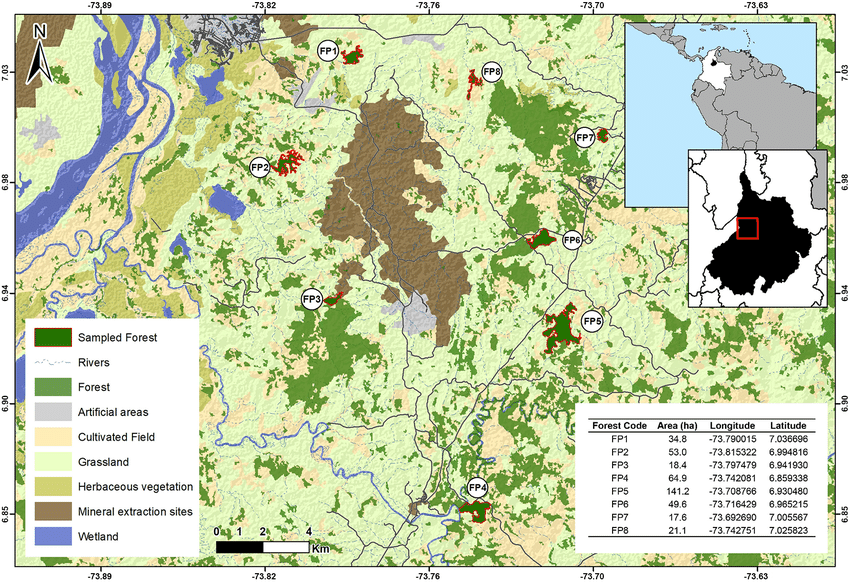
Tropical moist forests are complex and diverse ecosystems threatened by human-induced disturbance. Despite recent advances in the study of the impact of land-use change on mammal diversity, there is a lack of research about which factors affect mammal assemblages within fragmented landscapes in Colombia. Herein, we investigate how medium and large-bodied mammals in a fragmented landscape respond to landscape characteristics, identifying how they affect species richness and functional diversity. We sampled eight forested patches in the Middle Magdalena Valley in central Colombia and modeled mammal functional diversity (functional dispersion and evenness) and species richness as a function of landscape variables (i.e., patch size, patch shape, landscape connectivity, and forest fragmentation). Forest fragmentation was the most important variable explaining mammal species richness and functional diversity (measured as functional dispersion). Species richness, functional dispersion, and the number of functional groups were increased in less fragmented forest patches. Conversely, functional evenness exhibited the opposite trend. Taken together, these results show that mammal assemblages in forest patches within forest-dominated neighborhoods support both a higher diversity and a broader spectrum of ecological functions but are less resilient to environmental perturbations. We highlight the importance of forest cover for providing critical habitat for both generalized and specialized mammals in fragmented landscapes. Overall, our fndings reinforce the importance of defining conservation actions for minimizing the impact of human activities on the remaining native forests, as they are fundamental for maintaining wild mammals and the ecological processes in which they participate.

Autor(es): Fabio Leonardo Meza, Eliana Patricia Ramos, DIANA CARDONA

Predicting distributions of rare species: the case of the false coral snake Rhinobothryum bovallii (Serpentes: Colubridae)
2020·
Articulo

Predicting distributions of rare species: the case of the false coral snake Rhinobothryum bovallii (Serpentes: Colubridae)

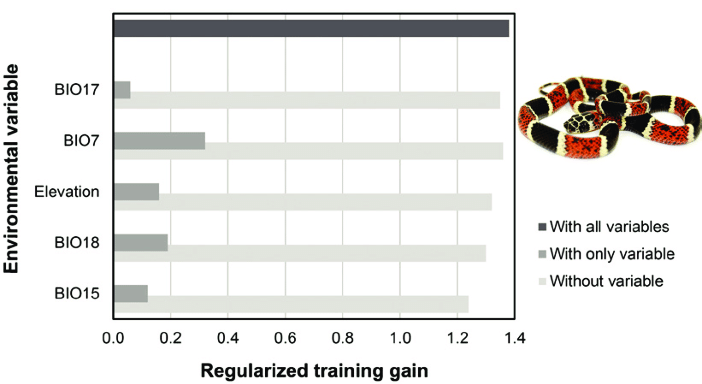
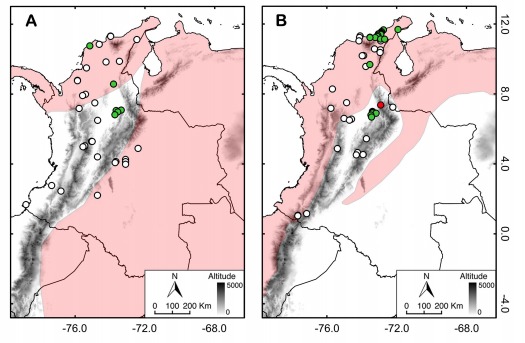
Predicting distributions of rare species: the case of the false coral snake Rhinobothryum bovallii (Serpentes: Colubridae). Typically, the lack of enough high-quality occurrence data makes it diffcult to defne the geographic distribution of rare species. However, species distribution models provide a powerful tool for biodiversity management, including efforts to predict the distributions of rare species. Herein, new and historical data are used to model the distribution of the False Tree Coral snake, Rhinobothryum bovallii. The prediction map reveals a disjunct distribution for this species, from the Central American Isthmus to the northwestern portion of South America, with the species occupying lowlands and premontane forests below about 1500 m elevation. We identifed 491,516 km2 of suitable habitat for R. bovallii (minimum training presence threshold of 0.424) and 59,353 km2 of core habitat, with concentrations in three relatively isolated core areas (10-percentile training presence threshold of 0.396), as follow: (1) a ?northern core? along the Pacifc and Caribbean coasts of Panama; (2) a ?central core? in the Middle Magdalena Valley in Colombia; and (3) a ?southern core? in the Ecuadorian Chocó. The occurrence of this species has a strong positive association with low precipitation seasonality, high precipitation in the warmest quarter, and low variability in annual temperature. Xeric and semiarid areas are unsuitable for this species and may pose environmental barriers limiting its distributional range. These results may lead to the discovery of additional populations of R. bovallii, identify priority survey areas, and by determining the extent of its natural habitat promote effective conservation strategies.

Autor(es): Fabio Leonardo Meza, ELIANA PATRICIA RAMOS PALLARES, JULIAN ANDRES ROJAS MORALES

First record and conservation status of Allobates algorei (Anura: Aromobatidae) in Colombia
2019·
Articulo

First record and conservation status of Allobates algorei (Anura: Aromobatidae) in Colombia

The Neotropical genus Allobates Zimmerman & Zimmerman (1988) is a large monophyletic clade composed of 54 described species distributed between Central America and South America (Frost, 2019; Grant et al., 2017). Twelve species have been recorded in Colombia, mostly distributed in the eastern flank of the Eastern Cordillera and Amazonian Region, although some species reach the Magdalena Valley and the Central and Western Cordillera (Acosta-Galvis, 2017).

Autor(es): Jorge Hernandez, ALDEMAR ALBERTO ACEVEDO RINCON, LUIS ORLANDO ARMESTO SANGUINO, FABIO LEONARDO MEZA JOYA

Corto (Resumen): Estructura y variabilidad genética espacial de poblaciones de Elaeis oleífera (Kunth) Cortés en las regiones Andina y Caribe de Colombia
2019·
Articulo

Corto (Resumen): Estructura y variabilidad genética espacial de poblaciones de Elaeis oleífera (Kunth) Cortés en las regiones Andina y Caribe de Colombia

El género Elaeis pertenece a la familia Arecaceae y está compuesto por la palma americana Elaeis oleifera (Kunth) Cortés y la palma africana Elaeis guineensis (Jacq). Aunque E. guineensis es la especie de palma más utilizada para la producción de aceite en Colombia, su rendimiento se ve afectado por enfermedades como la pudrición del cogollo. Sin embargo, híbridos del cruzamiento de E. oleifera y E. guineensis muestran resistencia/tolerancia a esta enfermedad, lo que establece a E. oleifera como un importante recurso para programas de mejoramiento genético. Este estudio evaluó la diversidad y estructura genética espacial de poblaciones de E. oleifera colectadas en 24 municipios de las regiones Andina y Caribe de Colombia. Análisis de 16 loci microsatélites en 280 individuos identificaron poblaciones fuera del equilibrio de Hardy-Weinberg por déficit de heterocigotos y la presencia de alelos nulos. La riqueza alélica varió con la distribución geográfica, siendo menor en San Pelayo, Córdoba (1,86) y mayor en Cimitarra, Santander (4,21). Se observaron diferencias entre pares de poblaciones que correspondieron parcialmente a ecorregiones de Colombia. Estos resultados fueron reflejados en análisis de inferencia Bayesiana y análisis DCPA que persistieron aun después de remover el efecto de alelos nulos. Aunque los patrones de diversidad y estructura genética observados en este estudio son útiles para la creación de bancos de germoplasma y el diseño de estrategias de conservación para esta especie, se recomienda el uso de marcadores SNPs para confirmar estos resultados.

Autor(es): Pricelis Paulin Polanco, Sergio Andres Marchant, PRICELIS PAULIN POLANCO FONTALVO, MARIA CAMILA RODRIGUEZ CRUZ, EDISON STEVE DAZA,, SERGIO ANDRES MARCHANT ROJAS, IVAN MAURICIO AYALA DIAZ, CARMENZA MONTOYA JARAMILLO, HERNAN MAURICIO ROMERO ANGULO

Modelo de distribución geográfica para la especie Elaeis oleifera (Kunth) Cortés, en la zona intertropical del continente americano
2019·
Articulo

Modelo de distribución geográfica para la especie Elaeis oleifera (Kunth) Cortés, en la zona intertropical del continente americano

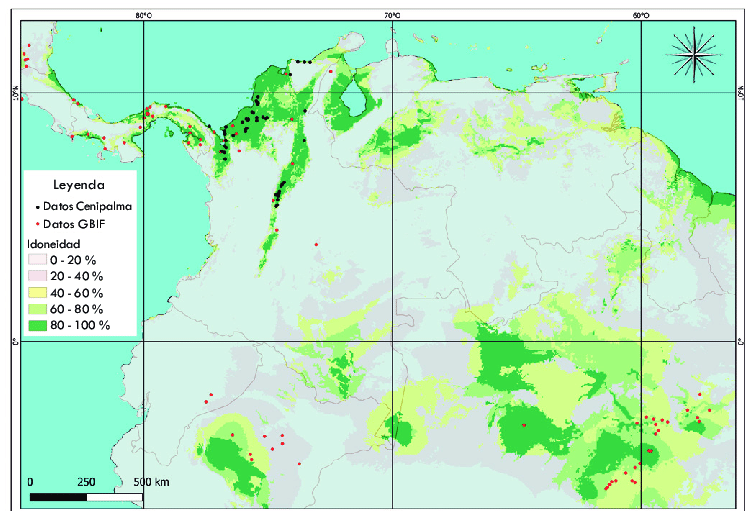
El modelamiento de la distribución geográfica de las especies constituye un área de conocimiento de gran interés para estrategias de conservación y más si se estudian aquellas que tienen una fuerte presión por la supervivencia en los espacios y nichos en los cuales coexisten en su forma silvestre. Este tipo de estudios también se utilizan para identificar espacios geográficos con potenciales de prospección, con capacidad de reubicación de la especie y para la medición del riesgo en la introducción de especies nuevas o invasoras. La especie Elaeis oleifera, catalogada en peligro de extinción, con poblaciones naturales amenazadas principalmente por fragmentación y pérdida del hábitat, tiene un importante lugar en los programas de mejoramiento genético por su capacidad para generar híbridos interespecíficos con la especie Elaeis guineensis y transferir características de interés agronómico. Adicionalmente, los efectos de cambio climático tendrán un impacto negativo en diversos ecosistemas y la mi-tigación de estos efectos se logra a través del conocimiento de su hábitat natural de desarrollo y su georreferenciación. Los resultados aquí mostrados dan cuenta, por primera vez, de la identificación de áreas de distribución natural de la especie en Colombia y países vecinos, a partir de registros recientes y georreferenciados de la existencia de nichos en nuestro país. Sumado a lo anterior, este estudio fortalece la colección biológica de la especie en Cenipalma, lo cual se complementa con los planes de conservación ex situ de E. oleifera como pilar del desarrollo de híbridos OxG para el sector agroindustrial.

Autor(es): Sergio Andres Marchant, Victor Orlando Rincon Romero, Iván Mauricio Ayala-Díaz, Carmenza Montoya, Edison Steve Daza, Hernan Mauricio Romero, Paulin P Fontalvo, Juan Sebastian Hernandez

Predicted distributions of two poorly known small carnivores in Colombia: the greater grison and striped hog-nosed skunk
2018·
Articulo

Predicted distributions of two poorly known small carnivores in Colombia: the greater grison and striped hog-nosed skunk

Distribución potencial de dos especies poco conocidas de pequeños carnívoros en Colombia: el grisón mayor y el zorrillo rayado. Estudios recientes han incrementado el conocimiento sobre la distribución de los pequeños carnívoros en Colombia, no obstante, la información para muchas especies sigue siendo deficiente. Los modelos de distribución de especies representan una herramienta útil para predecir la distribución geográfica de especies poco conocidas. Este estudio se enfoca en actualizar y modelar la distribución geográfica de dos pequeños carnívoros en Colombia, Galictis vittata y Conepatus semistriatus, con base en registros históricos y recientes confirmados. Utilizamos MaxEnt para modelar la distribución potencial de estas especies usando datos de presencia, así como variables climáticas y elevación. Nuestros resultados proporcionaron un fuerte apoyo al poder predictivo de los modelos y sugieren una amplia distribución de estas especies en Colombia, identificando 265063 km2 y 224238 km2 de hábitat adecuado para G. vittata y C. semistriatus, respectivamente. No obstante, una gran proporción de la distribución predicha para estas especies se encuentra actualmente fuera de áreas protegidas. Con base en estos resultados, resaltamos la necesidad de incrementar muestreos en regiones poco estudiadas donde se prevé que estas especies ocurran y donde actualmente no existen registros confirmados.

Autor(es): Fabio Leonardo Meza, FABIO LEONARDO MEZA JOYA, ELIANA PATRICIA RAMOS PALLARES, FERNANDO JAVIER CEDIEL MARTINEZ, VICTOR MANUEL MARTINEZ ARIAS, JAVIER ENRIQUE COLMENARES PINZON

Prokaryotic Community Characterization in a Mesothermic and Water- Flooded Oil Reservoir in Colombia
2015·
Articulo

Prokaryotic Community Characterization in a Mesothermic and Water- Flooded Oil Reservoir in Colombia

The prokaryotic community at the ?La Cira-Infantas? oil field, located in Colombia"s Middle Magdalena Valley Basin, was characterized using 16S rRNA gene sequence analysis. This characterization is a first-step in assessing the dynamics of microbial degradation and defining strategies that may increase oil recovery and quality at the site. Two 16S rRNA gene libraries were generated from the total community DNA extracted from production water using both Eubacterial and Archaea universal primers. Sequence analysis of the libraries indicated that a large percentage of Eubacteria clones were affiliated with class ?-, ?- and ?-Proteobacteria, Clostridia and Bacteroidetes. Archaea clones were dominated by Methanobacteria and Methanococci. Annotations at these generic levels indicate that the prokaryotic community has the following metabolic capacities: i) reduction of sulfur-compounds and fermentation, ii) nitrate reduction and sulfide oxidation, iii) decomposition of aromatic compounds, and iv) methane production. These results are discussed in the context of the importance of the characterized metabolic capacities for oil biodegradation in the mesothermic and water-flooded environment of this reservoir.

Autor(es): Jorge Hernandez, Francisco Jose Martinez, Jorge Luis Fuentes, GENIS ANDRES CASTILLO VILLAMIZAR, SILVIA JULIANA SALGAR CHAPARRO, BIBIANA ANDREA SILVA PLATA, ORIANA DANUTA SERNA DAZA, RICARDO MIER UMANA, MORRIS LEVY

Recombination of chl-fus gene (Plastid Origin) downstream of hop: a locus of chromosomal instability
2015·
Articulo

Recombination of chl-fus gene (Plastid Origin) downstream of hop: a locus of chromosomal instability

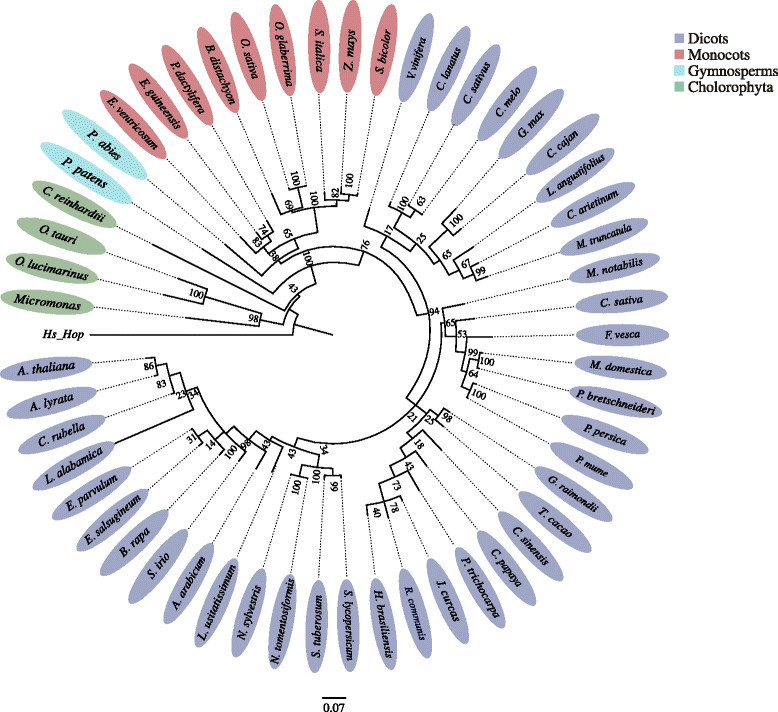
Background: The co-chaperone Hop [heat shock protein (HSP) organizing protein] has been shown to act as an adaptor for protein folding and maturation, in concert with Hsp70 and Hsp90. The hop gene is of eukaryotic origin. Likewise, the chloroplast elongation factor G (cEF-G) catalyzes the translocation step in chloroplast protein synthesis. The chl-fus gene, which encodes the cEF-G protein, is of plastid origin. Both proteins, Hop and cEF-G, derived from domain duplications. It was demonstrated that the nuclear chl-fus gene locates in opposite orientation to a hop gene in Glycine max. We explored 53 available plant genomes from Chlorophyta to higher plants, to determine whether the chl-fus gene was transferred directly downstream of the primordial hop in the proto-eukaryote host cell. Since both genes came from exon/module duplication events, we wanted to explore the involvement of introns in the early origin and the ensuing evolutionary changes in gene structure. Results: We reconstructed the evolutionary history of the two convergent plant genes, on the basis of their gene structure, microsynteny and microcolinearity, from 53 plant nuclear genomes. Despite a high degree (72%) of microcolinearity among vascular plants, our results demonstrate that their adjacency was a product of chromosomal rearrangements. Based on predicted exon--intron structures, we inferred the molecular events giving rise to the current form of genes. Therefore, we propose a simple model of exon/module shuffling by intronic recombinations in which phase-0 introns were essential for domain duplication, and a phase-1 intron for transit peptide recruiting. Finally, we demonstrate a natural susceptibility of the intergenic region to recombine or delete, seriously threatening the integrity of the chl-fus gene for the future. Conclusions: Our results are consistent with the interpretation that the chl-fus gene was transferred from the chloroplast to a chromosome different from that of hop, in the primitive photosynthetic eukaryote, and much later before the appearance of angiosperms, it was recombined downstream of hop. Exon/module shuffling mediated by symmetric intron phases (i.e., phase-0 introns) was essential for gene evolution. The intergenic region is prone to recombine, risking the integrity of both genes.

Autor(es): Jorge Hernandez, Libia Catalina Salinas Castellanos, Jacques Chomilier

No hay productos disponibles.

Colores al vuelo
2017·
Libro

Colores al vuelo

Con tan sugestivo título, la UIS publicó el que tal vez sea su libro bandera. Presentado al público el pasado 5 de marzo, esta obra ha tomado vuelo entre la comunidad universitaria, y ahora se propone tomarlo entre la comunidad general. Sus autores, vinculados a la Escuela de Biología y al Semillero de Ornitología de la UIS, presentan un libro sobre ornitología santandereana, acompañado por un atractivo registro fotográfico, y escrito con un estilo transparente, aun para los lectores no versados en ciencias básicas, a pesar de que lo fundamente el rigor científico propio de este tipo de obras.

Autor(es): Jose Gregorio Moreno, Jorge Enrique Avendaño, Fernando Rondon

No hay productos disponibles.

No hay productos disponibles.