Grupo de Investigación en Microbiología y Genética

Grupo de Investigación en Microbiología y Genética

Producción Intelectual

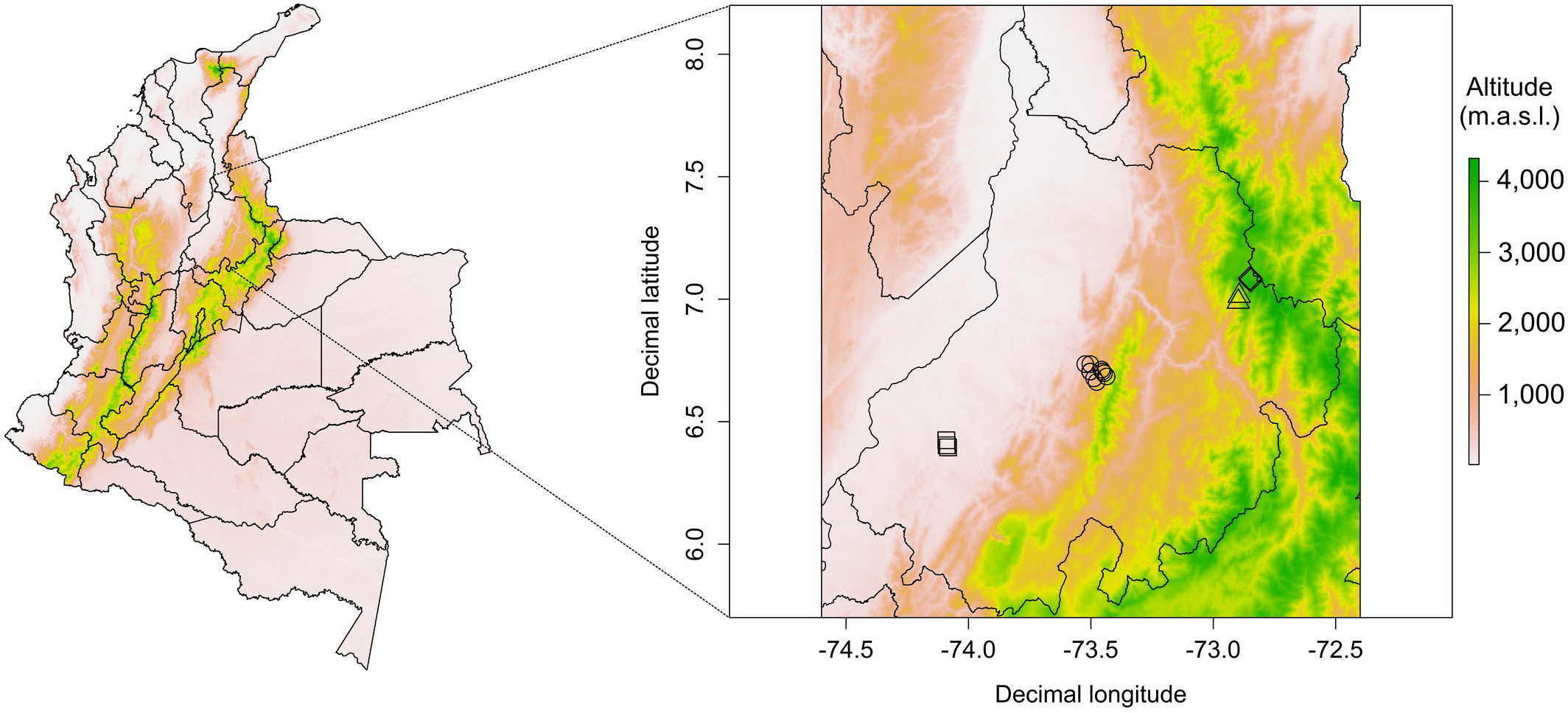
Glutathione-related genetic polymorphisms are associated with mercury retention and nephrotoxicity in gold-mining settings of a Colombian population
2021·
Articulo

Glutathione-related genetic polymorphisms are associated with mercury retention and nephrotoxicity in gold-mining settings of a Colombian population

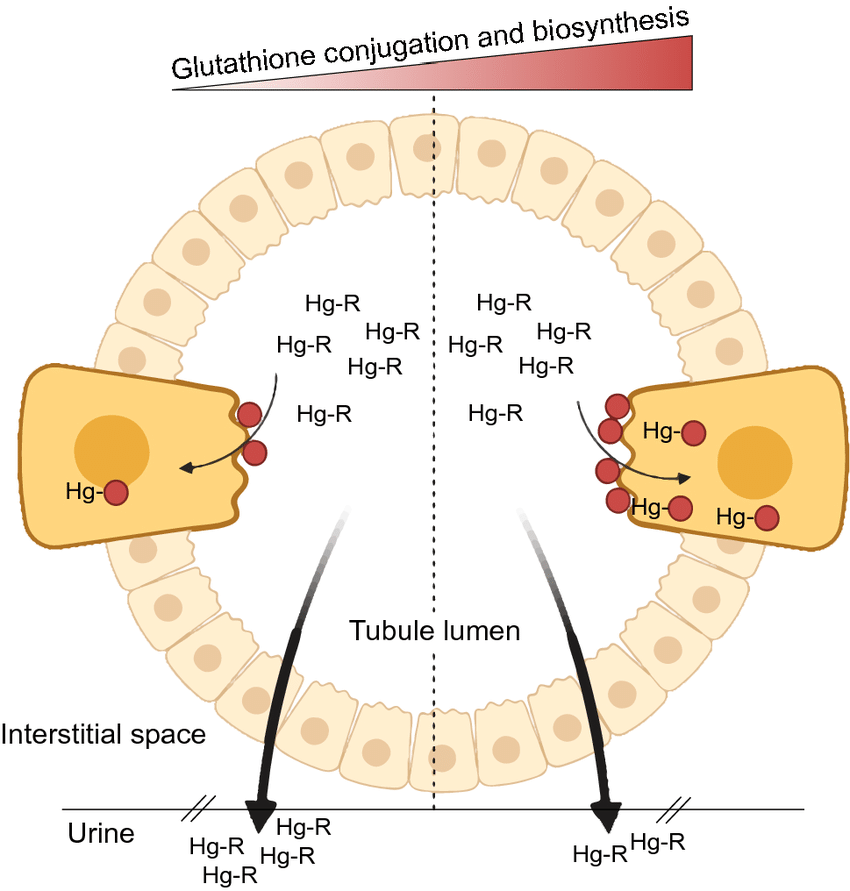
Mercury (Hg) vapor can produce kidney injury, where the proximal tubule region of the nephron is the main target of the Hg-induced oxidative stress. Hg is eliminated from the body as a glutathione conjugate. Thus, single nucleotide polymorphisms (SNPs) in glutathione-related genes might modulate the negative impact of this metal on the kidneys. Glutathione-related SNPs were tested for association with levels of Hg and renal function biomarkers between occupationally exposed (n=160) and non-exposed subjects (n=121). SNPs were genotyped by TaqMan assays in genomic DNA samples. Total mercury concentration was measured in blood, urine and hair samples. Regression analyses were performed to estimate the effects of SNPs on quantitative traits. Alleles GCLM rs41303970-T and GSTP1 rs4147581-C were significantly overrepresented in the exposed compared with the non-exposed group (P<0.01). We found significant associations for GCLM rs41303970-T with higher urinary clearance rate of Hg (B=0.062, P=0.047), whereas GCLC rs1555903-C was associated with lower levels of estimated glomerular filtration rate in the non-exposed group (eGFR, B= -3.22, P=0.008) and beta-2-microglobulin in the exposed group (B-2MCG, B= -19.32, P=0.02). A SNP-SNP interaction analysis showed significant epistasis between GSTA1 rs3957356-C and GSS rs3761144-G with higher urinary levels of Hg in the exposed (B=0.13, P=0.04) but not in the non-exposed group. Our results suggest that SNPs in glutathione-related genes could modulate the pathogenesis of Hg nephrotoxicity in our study population by modulating glutathione concentrations in individuals occupationally exposed to this heavy metal.

Autor(es): Fernando Rondon, Oscar Flórez-Vargas, Luz Helena Sánchez Rodríguez, Linda Rocha Muñoz, Olga Marcela Medina Pérez, Giovanna Rincón Cruz
Diagrammatic scales for the estimation of black node disease severity in common bean
2021·
Articulo

Diagrammatic scales for the estimation of black node disease severity in common bean

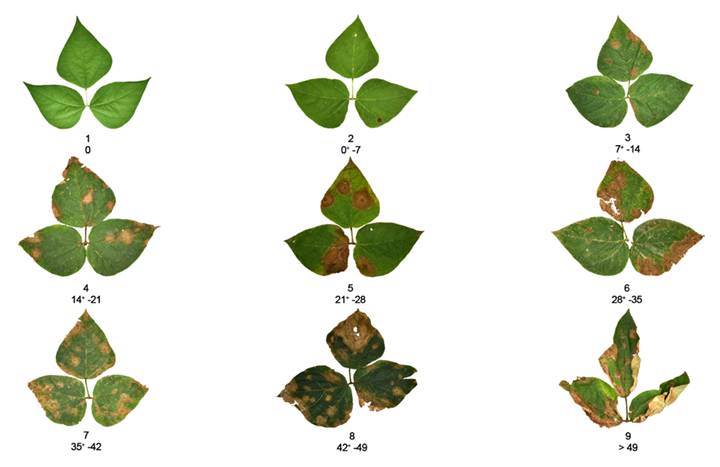
The objective of this study was to design two diagrammatic scales for the evaluation of black node disease (Stagonosporopsis hortensis and Boeremia spp.) in common bean (Phaseolus vulgaris L.). The developed scales corresponded to logarithmic intervals (SADL) of seven levels and equal intervals (SADE) of nine levels. These scales were compared to the scale developed by the International Center for Tropical Agriculture (CIAT), which corresponds to a descriptive scale (NoSAD). In the scale validation the accuracy, precision, and concordance of repeatability were determined using Lin?s concordance correlation coefficient, whereas inter-rater reproducibility was determined by the overall concordance correlation coefficient (OCCC). It was observed that with the use of the proposed scales, reproducibility and repeatability were significantly improved for inexperienced raters, and reproducibility was improved in the case of experienced raters. Thus, the designed standard area diagrams with equal and logarithmic intervals are a useful tool for estimating severity under field and experimental conditions as part of the study of this patho-system.

Autor(es): Luz Nayibe Garzon, Yuranis Miranda Montero, Linda Rincón Rivera

Prodigiosin Production and Photoprotective/Antigenotoxic Properties in Serratia marcescens Indigenous Strains from Eastern Cordillera of Colombia
2021·
Articulo

Prodigiosin Production and Photoprotective/Antigenotoxic Properties in Serratia marcescens Indigenous Strains from Eastern Cordillera of Colombia

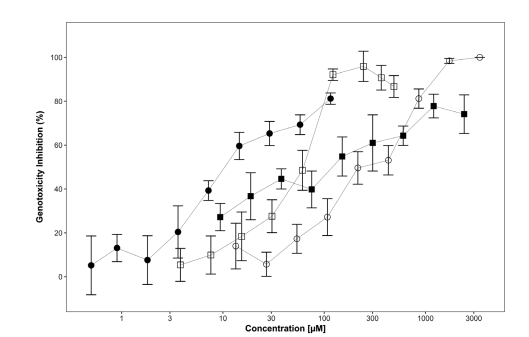
Serratia marcescens is a bacterial species that produces an antibacterial pigment (Prodigiosin) showing a wide adaptive response to environmental stresses. The study aimed to investigate Prodigiosin production in S. marcescens wild-type strains, as well as its relation to photoprotection and antigenotoxicity against UVB. Prodigiosin yield was spectrophotometrically assayed in extracts of bacterial strains grown in different culture media. In vitro photoprotection efficacy was evaluated using the in vitro indices sun protection factor (SPFin vitro) and critical wavelength (?c). The percentage of UVB antigenotoxicity estimates (%GI) in the SOS Chromotest was also evaluated. Correlation analysis was used to examine the relationship between Prodigiosin yield, SPFin vitro, %GI estimates and environmental traits (altitude, temperature, rainfall and solar irradiance). Prodigiosin yield in S. marcescens strains varied depending on culture media used for its growth, and it was correlated with environmental variables such as temperature and solar irradiance. SPFin vitro estimates were well correlated with Prodigiosin concentration and %GI values in the bacterial strains being studied. UVB photoprotective efficacy of the extracts obtained from S. marcescens strains depends on the strain?s Prodigiosin yield and its antigenotoxic potential. The extracts with Prodigiosin yield higher than ?17 ?g mL?1 could be used as sources of sunscreen ingredients.

Autor(es): Jorge Luis Fuentes, José D. D. Cediel Becerra, Jhon A. Suescun Sepulveda

ON BIRDS OF SANTANDER-BIO EXPEDITIONS, QUANTIFYING THE COST OF COLLECTING VOUCHER SPECIMENS IN COLOMBIA
2020·
Articulo

ON BIRDS OF SANTANDER-BIO EXPEDITIONS, QUANTIFYING THE COST OF COLLECTING VOUCHER SPECIMENS IN COLOMBIA

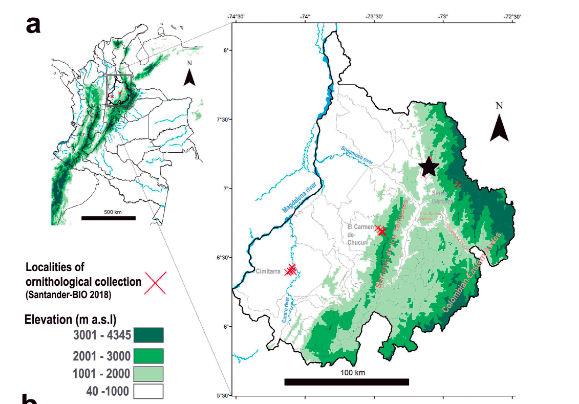
Several scientific reasons support continuing bird collection in Colombia, a megadiverse country with modest science financing. Despite the recognized value of biological collections for the rigorous study of biodiversity, there is scarce information on the monetary costs of specimens. We present results for three expeditions conducted in Santander (municipalities of Cimitarra, El Carmen de Chucurí, and Santa Barbara), Colombia, during 2018 to collect bird voucher specimens, quantifying the costs of obtaining such material. After a sampling effort of 1290 mist net hours and occasional collection using an airgun, we collected 300 bird voucher specimens, representing 117 species from 30 families. Such collection represents one of the largest series obtained during the historical ornithological exploration of Santander. We report differences among expeditions regarding the capture rate in mist nets, as well as differences in the sizes of taxa collected by mist nets and airgun. We discuss results in the context of previous ornithological expeditions in Colombia, commenting issues on the biology of some species, particularly those considered as noteworthy records (e.g., Red-legged Tinamou [Crypturellus erythropus], Cinnamon Screech Owl [Megascops petersoni], Saffron-headed Parrot [Pyrilia pyrilia], Black Inca [Coeligena prunellei], and Chestnut-crowned Gnateater [Conopophaga castaneiceps]). We calculated that the costs of obtaining and curating a specimen in Colombia, including tissues for molecular analysis, was ~US$60.4 (~$196 176 COP), which is among published costs of obtaining voucher specimens in other taxa and countries. These costs must be considered an investment in scientific capital because voucher specimens will provide biological information for hundreds of years.

Autor(es): Enrique Arbelaez, Daniela Villamizar, Fernando Rondon

Induction of the SOS response of Escherichia coli in repair-defective strains by several genotoxic agents
2020·
Articulo

Induction of the SOS response of Escherichia coli in repair-defective strains by several genotoxic agents

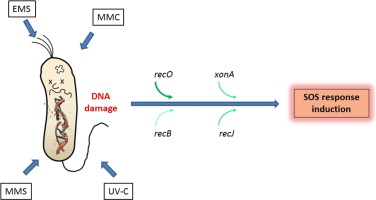
DNA is exposed to the attack of several exogenous agents that modify its chemical structure, so cells must repair those changes in order to survive. Alkylating agents introduce methyl or ethyl groups in most of the cyclic or exocyclic nitrogen atoms of the ring and exocyclic oxygen available in DNA bases producing damage that can induce the SOS response in Escherichia coli and many other bacteria. Likewise, ultraviolet light produces mainly cyclobutane pyrimidine dimers that arrest the progression of the replication fork and triggers such response. The need of some enzymes (such as RecO, ExoI and RecJ) in processing injuries produced by gamma radiation prior the induction of the SOS response has been reported before. In the present work, several repair-defective strains of E. coli were treated with methyl methanesulfonate, ethyl methanesulfonate, mitomycin C or ultraviolet light. Both survival and SOS induction (by means of the Chromotest) were tested. Our results indicate that the participation of these genes depends on the type of injury caused by a genotoxin on DNA.

Autor(es): Jorge Luis Fuentes, Jorge Serment-Guerrero, Viridiana Dominguez-Monroy, Jenny Davila-Becerril, Enrique Morales-Avila

Genetic Polymorphisms in Multispecific Transporters Mitigate Mercury Nephrotoxicity in an Artisanal and Small-Scale Gold Mining Community in Colombia
2020·
Articulo

Genetic Polymorphisms in Multispecific Transporters Mitigate Mercury Nephrotoxicity in an Artisanal and Small-Scale Gold Mining Community in Colombia

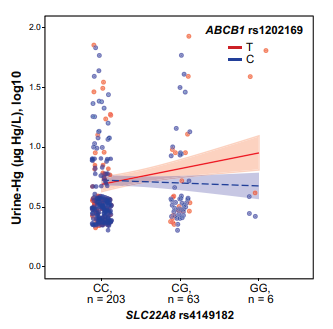
In artisanal and small?scale gold mining, occupational exposure to mercury (Hg) vapor is related to harmful effects on several organs, including the kidneys. We previously reported significantly increased levels of Hg in blood and urine despite normal kidney function in individuals from Colombia occupationally exposed to Hg compared with those nonexposed. We evaluated the contribution of 4 genetic variants in key genes encoding the transporters solute carrier (SLC; rs4149170 and rs4149182) and ATP-binding cassette(ABC; rs1202169 and rs1885301) in the pathogenesis of nephrotoxicity due to Hg exposure in these groups. Regression analysis was performed to determine the association between the blood- and urine-Hg concentration with SLC and ABC polymorphisms in 281 Colombian individuals (160 exposed and 121 nonexposed to Hg). We found an enrichment of ABCB1 rs1202169-T allele in the exposed group (p?=?.011; OR= 2.05; 95% CI = 1.18?3.58) compared with the nonexposure group. We also found that carriers of SLC22A8 rs4149182-G and ABCB1 rs1202169-T alleles had a higher urinary clearance rate of Hg than noncarriers (??=?0.13, p?=?.04), whereas carriers of SLC22A6 rs4149170-A and ABCB1 rs1202169-C alleles showed abnormal levels of estimated glomerular filtration rate (??=??84.96, p?=?.040) and beta-2-microglobulin (??=?743.38, p?<?.001). Our results suggest that ABCB1 rs1202169 and its interaction with SLC22A8 rs4149182 and SLC22A6 rs4149170 could mitigate Hg nephrotoxicity by controlling the renal proximal tubule cell accumulation of inorganic Hg. This will be useful to estimate the risk of kidney toxicity associated to Hg and the genetic selection to aid adaptation to Hg-rich environments.

Autor(es): Fernando Rondon, Oscar Flórez-Vargas, Luz Helena Sánchez Rodríguez, Linda Rocha Muñoz, Olga Marcela Medina Pérez, Giovanna Rincón Cruz
PIMA: A population informative multiplex for the Americas
2020·
Articulo

PIMA: A population informative multiplex for the Americas

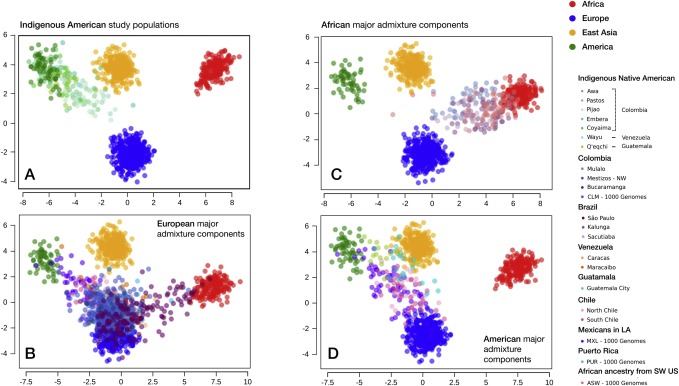
We describe an ancestry-informative autosomal SNP multiplex designed to be a small-scale, flexible panel that can complement uniparental markers in assessing the American variability (i.e. pre-Colombian) found in contemporary indigenous American populations. This study centered on choosing SNPs with the specific characteristics of: 1) extreme allele frequency differences between indigenous Americans and the African, European and East Asian population groups that contribute to present-day population variation in the Americas; 2) high informativeness-for-assignment In values; and 3) well-spaced genomic distribution and chromosomal separation from existing small-scale forensic ancestry marker sets. The resulting capillary electrophoresis SNaPshot single base extension test was named: PIMA (Population Informative Multiplex for the Americas), comprising 26 autosomal SNPs, a single X-chromosome SNP plus the amelogenin sex marker adapted for SNaPshot. PIMA complements the established 34plex forensic ancestry panel to provide a powerful and simple tool for the analysis of American populations, including those with admixed histories, commonly encountered in America. Comparing the results obtained with the combined marker panels of PIMA and 34plex to SNP data from a much larger ancestry panel allowed us to gauge their relative efficiency. PIMA+34plex gives equivalent power to the 314-SNP ?LACE? genomic ancestry control panel, while requiring a much smaller genotyping effort. The ancestry profiles and genetic structure of 22 populations spread across the American continent were estimated using PIMA+34plex data, and those estimates were contrasted with information provided by uniparental markers (mtDNA and Y-chromosome loci) for a small set of admixed individuals from Venezuela. Our results indicate that an American genetic component is efficiently detected in contemporary American populations using a small set of ancestry informative SNPs, and these co-ancestry estimates are consistent with the known history and demography of the Americas. The small scale and high population differentiation power of PIMA, particularly when combined with 34plex, provides a practical and powerful tool for genetic studies of American populations as well as forensic DNA analyses.

Autor(es): Fernando Rondon, Gloria Liliana Porras Hurtado, Julieta Henao Bonilla, Angel Carracedo, Silviene Oliveira, Guillermo Barreto, Vivian Nogueira Silbiger, Carlos Alberto Isaza, Lareu MV, Lisbeth Borjas

Las plantas como fuente de compuestos fotoprotectores frente al daño en el ADN producido por la radiación ultravioleta
2019·
Articulo

Las plantas como fuente de compuestos fotoprotectores frente al daño en el ADN producido por la radiación ultravioleta

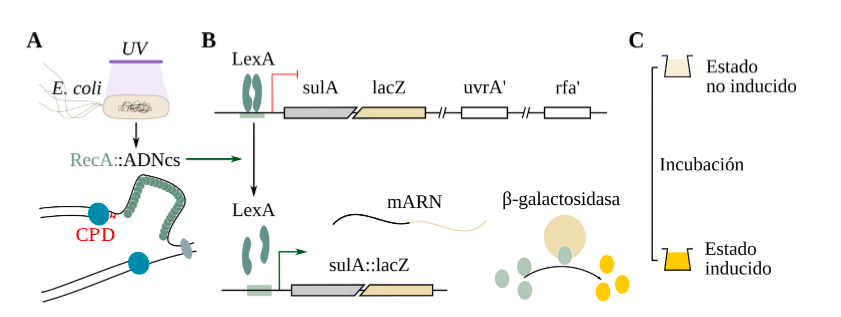
La fotoprotección es una estrategia preventiva y terapéutica frente al cáncer y el envejecimiento de la piel. En el presente trabajo se revisan los efectos biológicos adversos de la radiación ultravioleta, los conceptos básicos relevantes de la fotoprotección y los métodos para llevar a cabo su medición. Asimismo, se resumen los resultados obtenidos de la caracterización radiobiológica y genética del modelo experimental (SOS Chromotest) usado para la bioprospección de extractos y moléculas de origen vegetal con potencial en fotoprotección. Además, se presentan datos sobre la eficacia fotoprotectora y las estimaciones del efecto antigenotóxico de aceites esenciales y extractos obtenidos de especies de plantas, así como de los compuestos mayoritarios de los aceites y extractos promisorios analizados en este estudio. Por último, se postulan posibles mecanismos de acción de algunas moléculas relevantes. Los resultados se presentan y discuten destacando su potencial uso para el desarrollo de bloqueadores solares multifuncionales.

Autor(es): Jorge Luis Fuentes

Photoprotective and antigenotoxic effects of the flavonoids apigenin, naringenin and pinocembrin
2019·
Articulo

Photoprotective and antigenotoxic effects of the flavonoids apigenin, naringenin and pinocembrin

This work evaluated the photoprotective and antigenotoxic effects against ultraviolet B (UVB) radiation of flavonoid compounds apigenin, naringenin and pinocembrin. The photoprotective efficacy of these compounds was estimated using in vitro photoprotection indices, and the antigenotoxicity against UVB radiation was evaluated using the SOS chromotest and an enzymatic (proteinase K/T4 endonuclease V enzyme) comet assay in UV-treated Escherichia coli and human (HEK-293) cells, respectively. Naringenin and pinocembrin showed maximum UV-absorption peak in UVC and UVB zones, while apigenin showed UV-absorption capability from UVC to UVA range. These compounds acted as UV filters reducing UV-induced genotoxicity, both in bacteria and in human cells. The enzymatic comet assay resulted highly sensitive for detection of UVB-induced DNA damage in HEK-293 cells. In this work, the photoprotective potential of these flavonoids was widely discussed.

Autor(es): Adriana Garcia, Diego Armando Villamizar, Elena Stashenko, Jorge Luis Fuentes, Luis A. Núñez, Raquel Elvira Ocazionez

Proteomic analysis reveals an extract of the plant Lippia origanoides suppresses mitochondrial metabolism in triple-negative breast cancer cells
2018·
Articulo

Proteomic analysis reveals an extract of the plant Lippia origanoides suppresses mitochondrial metabolism in triple-negative breast cancer cells

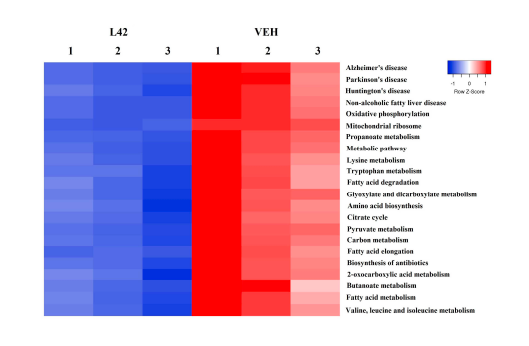
Triple-negative breast cancer is an aggressive subtype of breast cancer with low 5-year survival rates, high 3-year recurrence rates, and no known therapeutic targets. Recent studies have indicated that triple-negative breast cancers possess an altered metabolic state with higher rates of glycolysis, mitochondrial oxidative phosphorylation, and increased generation and utilization of tricarboxylic acid cycle intermediates. Here, we utilized label-free quantitative proteomics to gain insight into the anticancer mechanisms of a methanolic extract from the Central American plant Lippia origanoides on MDA-MB-231 triple-negative breast cancer cells. The L. origanoides extract dysregulated mitochondrial oxidative phosphorylation by suppressing the expression of several subunits of Complex I of the electron transport chain, and inhibited cellular metabolism by down-regulating key tricarboxylic acid cycle enzymes and mitochondrial lipid and amino-acid metabolic pathways. Our study also revealed that treatment with the extract activated the stress response and pathways related to cell-cycle progression and DNA repair. Overall, our results reveal compelling new evidence that the extract from L. origanodes triggers rapid irreversible apoptosis in MDA-MB-231 cells by effectively ?starving? the cells of metabolites and ATP. We continue to study the specific bioactive components of the extract in the search for novel, highly effective mitochondrial inhibitors to selectively target triple-negative breast cancer.

Autor(es): Jorge Luis Fuentes, VISHAK RAMAN, UMA K ARYAL, VICTORIA HEDRICK, RODRIGO MOHALLEM FERREIRA, ELENA STASHENKO, MORRIS LEVY, MARIA M LEVY, IGNACIO G CAMARILLO

Influence of the uvrA, recJ and recN gene mutations on the nucleoid reorganization in UV-treated Escherichia coli cells
2018·
Articulo

Influence of the uvrA, recJ and recN gene mutations on the nucleoid reorganization in UV-treated Escherichia coli cells

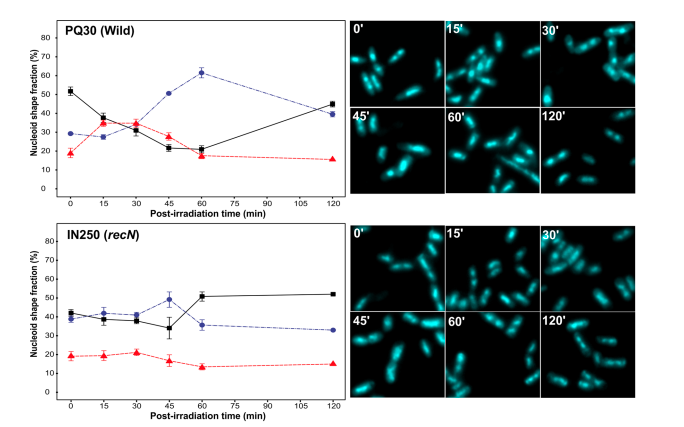
Exposure to ultraviolet (UV) radiation blocks DNA replication and arrests cellular division in Escherichia coli. Restoration of chromosome replication involves nucleoid reorganization, which involves the participation of the recombination-catalyzing proteins RecA, RecO, RecR and RecN. In this work, we evaluated the influence of recN, uvrA and recJ gene mutations on post-irradiation nucleoid reorganization. We used isogenic E. coli strains that are defective for these genes to study post-irradiation kinetics of the nucleoid shape fractions using fluorescence microscopy. The results showed that in the wild-type strain, post-irradiation nucleoid reorganization occurs, which restores the nucleoid shape fractions in the cells to those observed prior to irradiation. First, the nucleoid condenses into the central area of the irradiated cell. Second, the nucleoid disperses along the cell. Third, the cell enters the chromosome replicative phase and cytokinesis. Escherichia coli cells with a recN mutation did not exhibit increased nucleoid condensation, but chromosome replication and cytokinesis occurred. In the uvrA and recJ strains, the condensation step was delayed compared to the wild-type strain, and chromosome replication and cytokinesis did not occur. The results are discussed with an emphasis on the functions of RecN, UvrA and RecJ in nucleoid reorganization in UV-irradiated E. coli cells.

Autor(es): Carlos Felipe Estevez, Jorge Luis Fuentes, JORGE HUMBERTO SERMENT GUERRERO

Reproduction and community structure of fish from winter catch sites from industrial shrimp bycatch from the northeast and southeast Mexican Pacific
2018·
Articulo

Reproduction and community structure of fish from winter catch sites from industrial shrimp bycatch from the northeast and southeast Mexican Pacific

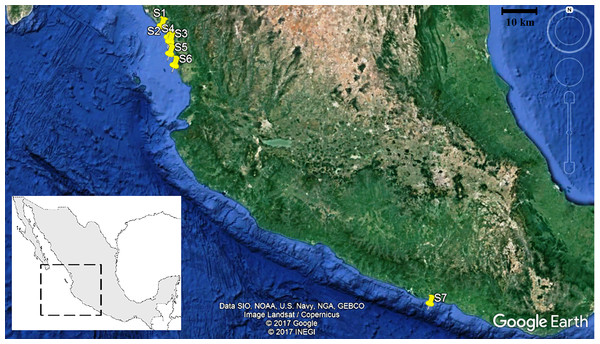
The shrimp fishery is one of the most important fisheries in the world, although the low selectivity from trawling nets has led to the capture of a large number of non-target species. Shrimp-bycatch species include a large number of fish and invertebrate species, of which fish species are the most abundant. The present study aims to determine the community structure as well as the average sizes at first maturity of the fish species from shrimp-bycatch caught from industrial fisheries in the Mexican Pacific from Sinaloa to Guerrero, from January to March 2015. The shrimp-bycatch fish diversity value was found to be 2.22. A total of 37 species of finfish were found, of which five were considered rare. The fish species with the highest Importance Value Index (IVI) levels were Pseudupeneus grandisquamis, Paralichthys woolmani, Lutjanus peru and Diapterus peruvianus. The average size at first maturity was calculated for all species. Of the analysed organisms, 90% were in the juvenile stage, including species with riverine and artisanal fisheries. The present study demonstrates the risk within marine populations to different non-target species due to the poor selectivity of shrimp trawls.

Autor(es): Francisco Jose Martinez, Jorge de Jesus Tirado-Ibarra, Mariany Loya-Rodriguez, Jose Carlos Morales-Arevalo, Isabel Rosario Muñoz Garcia, Jorge Saul Ramirez-Perez, Laura Rebeca Jimenez-Gutierrez

On the Causes of Rapid Diversification in the Páramos: Isolation by Ecology and Genomic Divergence in Espeletia
2018·
Articulo

On the Causes of Rapid Diversification in the Páramos: Isolation by Ecology and Genomic Divergence in Espeletia

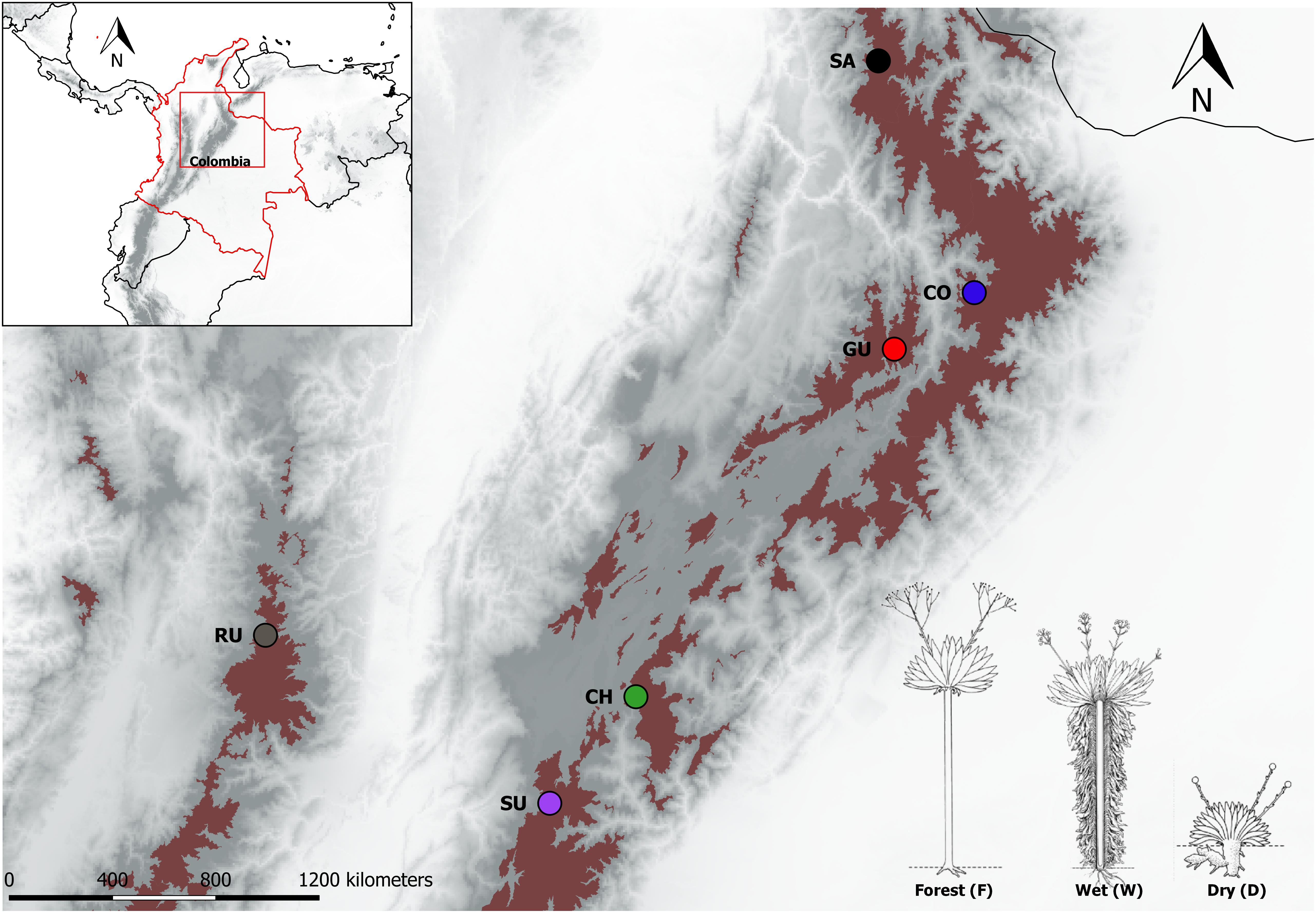
How diversity arises and what is the relative role of allopatric and ecological divergence are among the most persistent questions in evolution and ecology. Here, we assessed whether ecological divergence has enhanced the diversification of the Neotropical alpine plant complex Espeletia, also known as frailejones. This genus has one of the highest diversification rates ever reported and is distributed in the world?s fastest evolving biodiversity hotspot, the Páramo (Neotropical alpine grasslands at elevations of c. 2800?4700 m). Our goal was to determine whether ecology plays a role in divergence within the Espeletia complex by quantifying genome-wide patterns of ecological divergence. We characterized 162 samples of the three most common and contrasting ecotypes (distinct morphotypes occupying particular habitats) co-occurring in six localities in the northern Andes using Genotyping by Sequencing. Contrasting ecotypes were caulescent cloud forest populations, caulescent populations from wind-sheltered and well-irrigated depressions and acaulescent populations from wind-exposed drier slopes. We found high polymorphism with a total of 1,273 single nucleotide polymorphisms (SNPs) that defined the relationships among nine genetic clusters. We quantified allelic associations of these markers with localities and habitats using 18 different general and mixed-effects statistical models that accounted for phylogenetic distance. Despite that these models always yielded more SNPs associated with the localities, markers associated with the habitat types were recovered too. We found strong evidence for isolation-by-distance (IBD) across populations despite rampant gene flow, as expected for plant groups with limited seed dispersal. Contrasts between populations of different habitat types showed that an isolation-by-environment (IBE) trend emerged and masked the IBD signal. Maximum likelihood estimation of the number of migrants per generation (Nem) among ecotypes confirmed the IBE pattern. This result illustrates the importance of mountains? environmental variation at a local scale in generating rapid morphological radiations and maintaining multiple adaptations in a fast-evolving ecosystem like the Páramo.

Autor(es): Luz Nayibe Garzon, Andrés J. Cortés , Jhon B. Valencia, Santiago Madriñán

Interspecific variation and genetic relationship among Colombian Lippia sp. based on small ribosomal subunit gene sequence analysis
2018·
Articulo

Interspecific variation and genetic relationship among Colombian Lippia sp. based on small ribosomal subunit gene sequence analysis

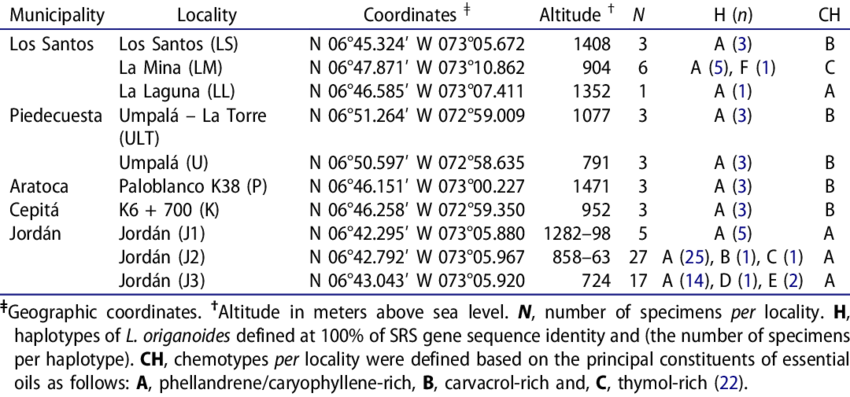
Six Lippia sp. were subjected to sequence analysis of the small ribosomal subunit (SRS) or 18S rDNA gene (ca. 1530 bp in length) for studying their genetic relationship. A total of nine nucleotide differences distinguished the species-specific SRS haplotypes of L. alba, L. americana, L. canescens, and L. micromera from L. origanoides and L. graveolens, which shared the same primary SRS haplotype. Five haplotypes (B-F), most with a single nucleotide substitution, were found among 71 naturally collected specimens of L. origanoides. A Neighbor-Joining cluster based on SRS haplotypes from these Lippia sp. and previously characterized related species (Lantana camara, Phyla lanceolata, Verbena bracteata, and V. hastata) indicated two groups, corresponding to Lantaneae and Verbeneae. The Lantaneae group indicated that Phyla lanceolata followed by L. americana were the most distinct species within the clade. In addition, there was evidence of at least three divergent sub-groups within the clade: 1) L. canescens + L. micromera, 2) L. alba + Lantana camara, and 3) L. origanoides + L. graveolens.

Autor(es): Francisco Jose Martinez, Fernando Rondon, Jorge Luis Fuentes, Liliana Santamaría-Acevedo, Cesar Augusto Prada-Medina, Elena Stashenko, Morris Levy, María Mercedes Levy

No hay productos disponibles.

Colores al vuelo
2017·
Libro

Colores al vuelo

Con tan sugestivo título, la UIS publicó el que tal vez sea su libro bandera. Presentado al público el pasado 5 de marzo, esta obra ha tomado vuelo entre la comunidad universitaria, y ahora se propone tomarlo entre la comunidad general. Sus autores, vinculados a la Escuela de Biología y al Semillero de Ornitología de la UIS, presentan un libro sobre ornitología santandereana, acompañado por un atractivo registro fotográfico, y escrito con un estilo transparente, aun para los lectores no versados en ciencias básicas, a pesar de que lo fundamente el rigor científico propio de este tipo de obras.

Autor(es): Jose Gregorio Moreno, Jorge Enrique Avendaño, Fernando Rondon

No hay productos disponibles.

No hay productos disponibles.